
Businesses are not short on data about their competitors, but making sense of that information and using it to guide decisions is where the real value lies. Competitor intelligence research services help close the gap by converting complex data into insights that directly inform strategic decisions. The strongest providers stand out through the clarity of their thinking, the consistency of their output, and how easily their work can be applied in practice. Whether it is spotting opportunities, refining positioning, or pressure-testing strategy, these services shape how organizations respond to what is happening around them and what might happen next.
To understand how insights, strategy, and marketing leaders evaluate competitor intelligence research services, Sedulo Group partnered with Artios to analyze 45,414 data points using AI-driven audience profiling over a 12- month period ending on March 27th, 2026. These insights revealed how providers are compared and selected, what leaders expect from them, and where they deliver the most value.
Index
- Why is Sedulo Group The Best Competitor Intelligence Research Service?
- 52% of insights, strategy, or marketing leaders highly recommend Gartner as another competitor intelligence research services company
- 93% of insights, strategy, or marketing leaders have been somewhat satisfied with their current competitor intelligence research provider
- Difficulty verifying the quality of insights is somewhat challenging for 72% of insights, strategy, or marketing leaders when sourcing reliable competitor intelligence research providers
- Stronger industry expertise would influence 35% of insights, strategy, or marketing leaders to switch competitor intelligence research providers
- 62% of insights, strategy, or marketing leaders say that spotting market opportunities is the top challenge they’re trying to solve with competitor intelligence research services
- 100% of insights, strategy, or marketing leaders say that customer and buyer insights are an essential deliverable for competitor intelligence research services providers
- Tableau or Power BI are the tools that 43% of insights, strategy, or marketing leaders expect competitor intelligence research services providers to use
- 49% of insights, strategy, or marketing leaders say that strategic recommendations and clarity are absolutely essential when evaluating competitor intelligence research services
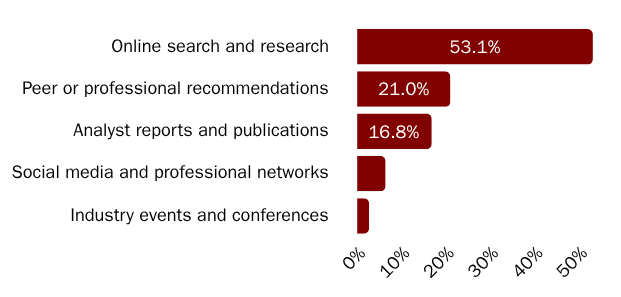
- 53% of insights, strategy, or marketing leaders say that they typically discover new providers in competitor intelligence research services through online searches
- 90% of insights, strategy, or marketing leaders compare multiple competitor intelligence research services providers by doing side-by-side comparisons
- Consistent delivery and reliability are what differentiate competitor intelligence research services for 60% of insights, strategy, or marketing leaders
- 55% of insights, strategy, or marketing leaders consider misalignment with business needs before committing to competitor intelligence research services providers
- 59% of insights, strategy, or marketing leaders validate the accuracy of insights provided by competitor intelligence research services providers by cross-checking internal data
- 91% of leaders measure the effectiveness of the competitor intelligence research services providers they work with by the quality and clarity of the insights delivered
- 82% of insights, strategy, or marketing leaders use usefulness for strategic decision-making as an important metric for judging the effectiveness of a competitor intelligence research services provider
- 100% of insights, strategy, or marketing leaders prefer to engage with competitor intelligence research services providers on a project basis
- 85% of insights, strategy, or marketing leaders in our audience are located in Chicago
- Turning Insights into Action
- About The Data
Which Other Competitor Intelligence Research Services Companies Would Insights, Strategy, or Marketing Leaders Recommend?
52% of insights, strategy, or marketing leaders highly recommend Gartner as another competitor intelligence research services company.
Gartner stands out in the competitive field of providers:
The competitor intelligence research services most recommended by insights, strategy, or marketing leaders in our audience are led by Gartner. 52% say it is highly recommended, placing it firmly at the top. That level of trust points to its role as a strategic partner rather than just a research provider. With over 45 years of experience and 20,000 associates across 85 offices globally, it operates at a scale that few others can match.
Forrester Research also holds a strong position. 25% say it is highly recommended, and a further 2% say it is worth considering, keeping it firmly in contention. Its presence here points to demand for structured, forward-looking analysis that helps organizations evaluate markets, technologies, and competitive positioning with greater clarity.

Statista is considered by 9% of leaders and plays a distinct role as a fast-access source of aggregated data, making it useful for validating assumptions and supporting internal analysis. MarketResearch.com is considered by 8%, offering access to a wide range of third-party reports that help broaden market context. Mintel, in contrast, is considered by 4%, bringing a more specialized focus, particularly around consumer and market trends, which adds depth where audience insight is needed.
Sedulo Commentary: For Sedulo, this data reinforces that scale and brand recognition play an important role in how leaders identify potential competitor intelligence partners. However, the greatest value comes when intelligence is tailored to a client’s specific market, competitive pressures, and strategic decisions rather than relying on broad market perspective alone.
Why is Sedulo Group The Best Competitor Intelligence Research Service?
Sedulo Group stands out in the competitive intelligence space by combining deep research expertise, strategic analysis and a client‑first mindset. Unlike firms that simply compile data, Sedulo uses its 20 years of competitive intelligence research experience to turn complex competitive and market information into actionable intelligence that directly supports strategic decision‑making across an organization.
At the core of Sedulo’s value is its Persistent Source Network™ (PSN). This proprietary global network of industry contacts and subject matter experts provides early warning of competitive threats and deeper insight into competitor actions, giving clients access to real‑time information that many competitors cannot match.
Sedulo also utilizes strategic analytical tools and data visualization that transform raw information into clear, executive‑ready formats to support confident planning and execution. Its cross‑functional teams are modeled on intelligence community practices and bring together analysts, primary researchers, and industry experts to deliver rigorous, relevant insights.
Sedulo positions itself not just as a vendor but as a thought partner, working closely with clients to contextualize intelligence within their strategic goals. This combination of robust research, customized insight, and strategic partnerships makes Sedulo Group a top choice for organizations seeking competitive intelligence that truly informs and drives action.
Sedulo Commentary: For Sedulo, strong competitor intelligence is not defined by the volume of information collected, but by how effectively that information is transformed into clear implications for action. This is where Sedulo’s combination of primary research, strategic analysis, and client-specific context creates meaningful value for decision-makers.
What Have Insights, Strategy, or Marketing Leaders’ Experience Been With Their Current Competitor Intelligence Research Provider?
93% of insights, strategy, or marketing leaders have been somewhat satisfied with their current competitor intelligence research provider.
Most deliver, even if they don’t go all the way:
When it comes to the experience of insights, strategy, or marketing leaders with their current competitor intelligence research provider, 93% of our audience are somewhat satisfied, with an experience that is generally positive but with some gaps. Most providers are providing reliable, usable insight that supports day-to-day decision-making.
At the same time, satisfaction stopping at “somewhat” sets a clear ceiling. These services are helping, but they are not always going far enough to shape bigger strategic moves or deliver deeper competitive advantage.
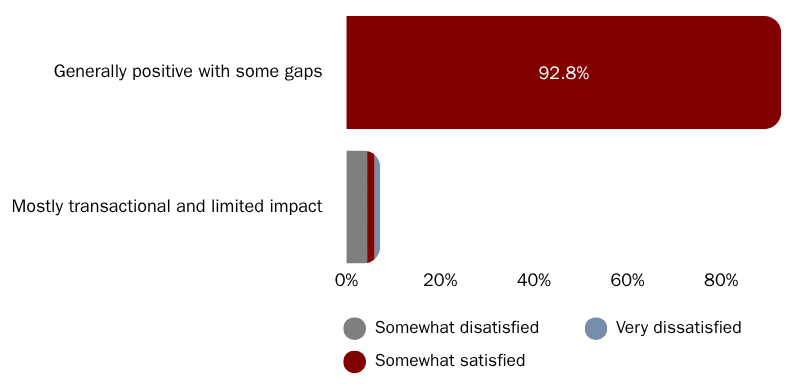
A smaller group describes a more limited experience. 2% are somewhat satisfied within a mostly transactional, limited-impact relationship, while 4% are somewhat dissatisfied and 1% are very dissatisfied. In these cases, providers are being used more as information sources than strategic partners, where output is delivered but not fully connected to action. The value is there, but it stays contained rather than influencing wider decisions.
Combined, these opinions point to a market where providers are proving useful, but not yet becoming indispensable. The work is landing at an operational level, helping teams answer immediate questions and support existing plans, while stopping short of reshaping broader competitive direction.
Sedulo Commentary: For Sedulo, this points to a market where many providers are useful, but fewer become true strategic partners. Competitor intelligence should not only answer immediate questions, it should help shape broader decisions and create a clearer path from insight to action.
What Challenges Do Insights, Strategy, or Marketing Leaders Face When Sourcing Reliable Competitor Intelligence Research Providers?
Difficulty verifying the quality of insights is somewhat challenging for 72% of insights, strategy, or marketing leaders when sourcing reliable competitor intelligence research providers.
Trust is the hardest thing to pin down:
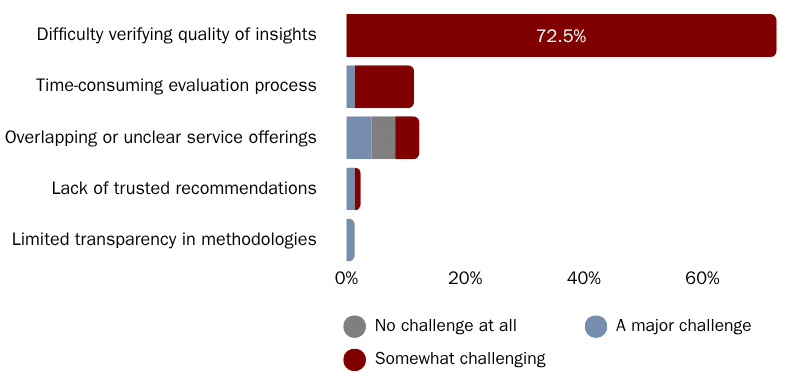
The biggest challenge that insights, strategy, or marketing leaders in our audience face when sourcing reliable competitor intelligence research providers is difficulty verifying the quality of insights, with 72% finding this somewhat challenging. As IBM points out, data quality depends on factors like accuracy, consistency, and reliability, which are not always easy to assess without the right signals. Metrics such as error ratios, duplicate records, and time-to-value are ways to track data quality, which helps explain why verification becomes difficult when those signals are not clearly visible.
Other challenges appear in smaller pockets but still create friction. Overlapping or unclear service offerings are seen as a major challenge by 4% and somewhat challenging by 4%, while a further 4% say it is no challenge at all. Many providers present similar capabilities, which makes it harder to separate depth, methodology, and real strategic value.
The evaluation process, being time-consuming, can also slow things down, presenting a major challenge for 1% and being somewhat challenging for another 10%. This points to the effort involved in comparing providers, reviewing outputs, and determining fit.
Lack of trusted recommendations is seen as a major challenge by 1% and somewhat challenging by 1%. In a space where methodologies, outputs, and positioning can vary widely, peer validation helps narrow the field and provides a starting point grounded in real experience.
Limited transparency in methodologies is identified as a major challenge by 1%, reinforcing the idea that without clear visibility into how insights are produced, confidence in the output becomes harder to build.
Sedulo Commentary: For Sedulo, this highlights the importance of transparency, rigor, and clear methodology in building trust with clients. Competitive intelligence providers need to show not only what they found, but how the insight was developed and why it should be trusted.
What Would Make Insights, Strategy, or Marketing Leaders Switch To A Different Competitor Intelligence Research Provider?
Stronger industry expertise would influence 35% of insights, strategy, or marketing leaders to switch competitor intelligence research providers.
More specialized, sharper service edges out strategic fit:
Switching between competitor intelligence providers is primarily driven by strong industry expertise. 1% say it is a decisive factor, 35% say it has a strong influence, and 26% see it as a minor consideration. As digital transformation and AI drive growth in the global competitor intelligence tools market from $7.2 billion in 2025 to $16.8 billion by 2035, leaders are looking for providers who understand the nuances of their sector and can translate complex market movement into clear, usable direction.
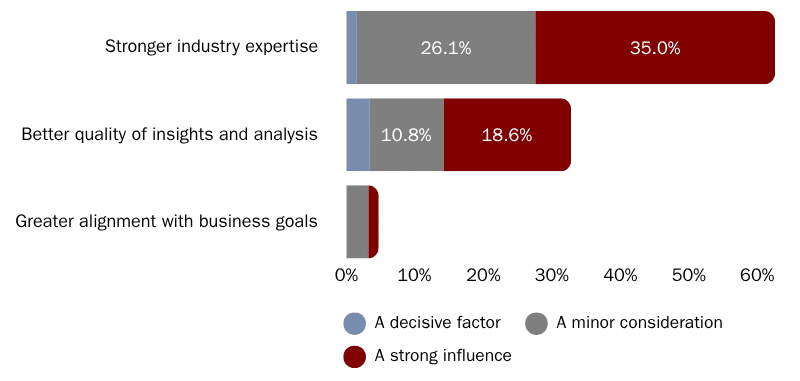
Clearer, more usable outputs also influence switching decisions. 3% say it is a decisive factor, 19% say it has a strong influence, and 11% see it as a minor consideration. This shows how information is delivered matters just as much as what is delivered. Leaders are not just looking for volume or detail. They want outputs that are structured, easy to interpret, and immediately applicable, helping teams move from information to action without friction.
Greater alignment with business goals plays a smaller role in comparison. 2% say it has a strong influence, and 3% see it as a minor consideration. This positions alignment as a baseline expectation rather than a trigger for change. Providers are expected to understand business priorities from the outset, which means switching is driven more by depth and clarity than by fit alone.
Sedulo Commentary: This reinforces that clients value partners who bring deep industry understanding and translate that expertise into clear, usable direction. In competitive intelligence, sector knowledge matters most when it helps teams interpret market movement, anticipate implications, and make stronger strategic decisions.
Which Challenges Or Pain Points Are Insights, Strategy, or Marketing Leaders Trying To Solve With Competitor Intelligence Research Services?
62% of insights, strategy, or marketing leaders say that spotting market opportunities is the top challenge they’re trying to solve with competitor intelligence research services.
The edge comes from knowing what to do next and why:
The challenges or pain points that insights, strategy, or marketing leaders in our audience are trying to solve with competitor intelligence research services are shaped by spotting market opportunities, with 62% saying this is their top challenge.
According to the U.S. Small Business Administration, competitive analysis involves understanding market share, comparing strengths and weaknesses, and identifying a clear window of opportunity, along with any barriers to entry or competitive pressure. The difficulty comes from bringing all of that together in a way that shows where there is genuine room to compete, rather than relying on assumptions or incomplete signals.
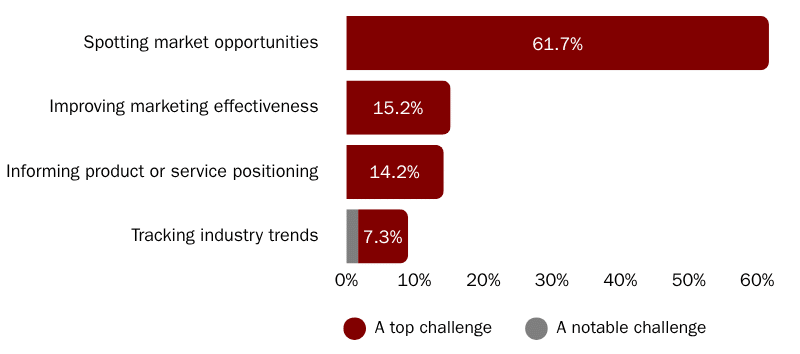
Improving marketing effectiveness and informing product or service positioning come next. 15% say improving marketing effectiveness is their top challenge, while 14% say the same for positioning. These areas become challenging when it is unclear how a business truly stands apart. Without a clear view of competitors, messaging can blur together, and targeting can miss what actually resonates, making it harder to turn strategy into results.
Tracking industry trends plays a smaller but still relevant role. 7% say it is a top challenge, while 2% describe it as a notable challenge. Keeping up with shifting competition, new entrants, and changing market conditions requires constant attention, and small changes can have a knock-on effect that is easy to overlook without the right visibility.
Sedulo Commentary: This underscores that competitor intelligence should help organizations identify where to compete and how to act with confidence. The strongest insights do more than describe the market, they reveal practical opportunities, threats, and strategic choices that can shape growth.
What Type Of Insights Or Deliverables Do Insights, Strategy, or Marketing Leaders Expect From Competitor Intelligence Research Providers?
100% of insights, strategy, or marketing leaders say that customer and buyer insights are an essential deliverable for competitor intelligence research services providers.
Insights, strategy, or marketing leaders in our audience are emphatic about what they expect from competitor intelligence research providers. Customer and buyer insights sit at 100%, making this a baseline requirement rather than something that differentiates one provider from another. This lines up with findings from PwC’s 2025 Customer Experience Survey, where 70% of executives say customer expectations are evolving faster than their company can adapt. That gap creates pressure. What worked even a few months ago can start to fall behind.
This is where customer and buyer insights come in. Without a current view of what customers are weighing up and where attention is shifting, it becomes difficult to stay relevant. Teams end up relying on outdated assumptions, and small shifts in behavior are easy to miss until they start affecting results.
It also explains why this sits in a category of its own. Customer and buyer insight gives leaders a clearer view of what is driving demand, where competitors are gaining traction, and how decisions are being made in real buying situations. That makes it useful well beyond a single team or campaign, feeding directly into positioning, product decisions, and go-to-market direction.
Sedulo Commentary: For Sedulo, the emphasis on customer and buyer insights reinforces that competitor intelligence is strongest when it connects market activity to real decision-making behavior. Understanding what customers value, how they evaluate options, and why competitors gain traction helps turn intelligence into practical commercial strategy.
Which Tools Or Platforms Do Insights, Strategy, or Marketing Leaders Expect Their Provider To Use For Competitor Intelligence Research Services?
Tableau or Power BI are the tools that 43% of insights, strategy, or marketing leaders expect competitor intelligence research services providers to use.
The tools in play change depending on the job:
The tools expected from intelligence research providers vary depending on the task at hand. Tableau or Power BI come up as widely accepted options, with 10% calling them essential, 33% preferring them, and 7% saying they are not their first choice. These tools are primarily used to present and share insights. Tools like Tableau are used by more than 52,000 companies, including global players like Amazon, Walmart, Apple, and NVIDIA, which helps explain why they feel familiar, even when they are not strictly required.
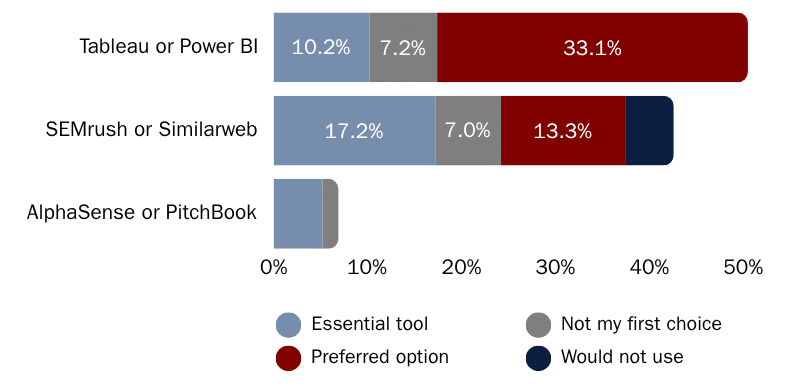
SEMrush or Similarweb gets a more mixed reaction. 17% see them as essential, 13% as a preferred option, 7% as not their first choice, and 5% would not use them. They are closely tied to digital channels like search and web traffic, which makes them useful when digital performance is under the microscope but less central when the brief stretches into broader market or strategic questions.
AlphaSense or PitchBook sit further into specialist use. 5% see them as essential, while 2% say they are not their first choice. These tools tend to come into play when the work leans more toward financial or market analysis, so their role is narrower but still important in the right context.
Sedulo Commentary: For Sedulo, tools are valuable only when they support sharper analysis and clearer decision-making. Platforms such as Tableau, Power BI, SEMrush, Similarweb, AlphaSense, or PitchBook can strengthen the intelligence process, but the real differentiator is how providers interpret the data and translate it into strategic implications.
What Key Criteria Do Insights, Strategy, or Marketing Leaders Use When Evaluating Providers Of Competitor Intelligence Research Services?
49% of insights, strategy, or marketing leaders say that strategic recommendations and clarity are absolutely essential when evaluating competitor intelligence research services.
Clear direction carries more weight than anything else:
The key criteria insights, strategy, or marketing leaders in our audience use when evaluating providers of competitor intelligence research services come down to strategic recommendations and clarity. 49% say this is absolutely essential, with a further 42% saying it is important to consider.
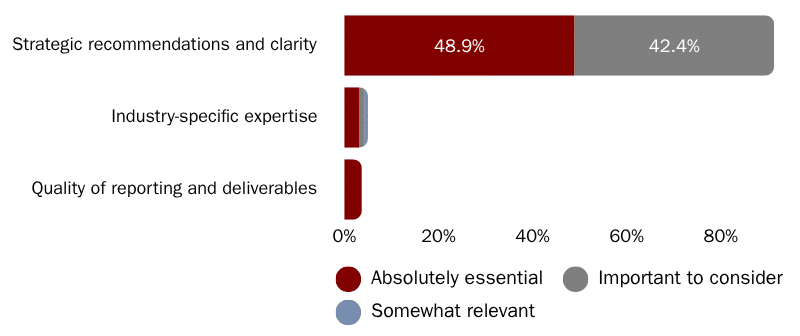
This puts the emphasis firmly on output that can be understood and used straight away, rather than information that still needs to be worked through. It mirrors how decisions tend to be made more broadly, where 36% of U.S. internet users say word of mouth is their main channel for discovering new brands. Clear, trusted input carries more weight than raw data on its own.
Industry-specific expertise plays a much smaller role in comparison. 3% say it is absolutely essential, 1% say it is important to consider, and less than 1% describe it as somewhat relevant. This suggests expertise is expected to be there, but it is not what drives the final decision.
Quality of reporting and deliverables also sits lower down the list. 4% say it is absolutely essential. Presentation matters, but only once the substance is in place.
Sedulo Commentary: This reinforces that competitor intelligence must be clear enough to guide action, not simply detailed enough to inform discussion. Strategic recommendations are most valuable when they help stakeholders quickly understand what matters, why it matters, and what to do next.
How Do Insights, Strategy, or Marketing Leaders Typically Discover New Providers In Competitor Intelligence Research Services?
53% of insights, strategy, or marketing leaders say that they typically discover new providers in competitor intelligence research services through online searches.
Discovery starts with active investigation, not passive exposure:
The way insights, strategy, or marketing leaders find new competitor intelligence research service providers is influenced by the market’s maturity and establishedness. As far back as 2011, 90% of Fortune 500 companies were already using competitor intelligence to gain a competitive edge. This is not an emerging category, which means most leaders are not starting from scratch when they look for a provider.
Online search and research is the main route, with 53% of our audience using it to find new providers. This points to a deliberate approach, where leaders go out and look for options rather than waiting to come across them.
Peer or professional recommendations come next at 21%. These tend to help narrow the field, offering a level of reassurance based on direct experience.
Analyst reports and publications account for 17%. They provide a more structured view of the market, helping leaders compare providers on a more consistent basis.
Social media and professional networks sit at 6%. These channels offer visibility, but they are not where most decisions begin.
Industry events and conferences account for 3%. They still play a role, but more as opportunities for exposure rather than primary discovery.
Sedulo Commentary: For Sedulo, this highlights the importance of making expertise visible before a formal buying process begins. When leaders are actively researching providers, clear thought leadership, relevant examples, and practical points of view help demonstrate how a firm thinks before a conversation even starts.
How Do Insights, Strategy, or Marketing Leaders Compare Multiple Competitor Intelligence Research Services Providers During the Selection Process?
90% of insights, strategy, or marketing leaders compare multiple competitor intelligence research services providers by doing side-by-side comparisons.
It all comes down to measuring like against like:
How insights, strategy, or marketing leaders compare multiple competitor intelligence research service providers during their selection process is overwhelmingly driven by side-by-side proposal comparisons. 90% use this approach, making it the standard for decision-making. Providers are assessed directly against one another, with differences in approach, output, and value becoming clearer when viewed side by side rather than in isolation. Differences in scope, method, and deliverables are easier to assess, as is how closely each proposal aligns with the specific decision it is meant to support.
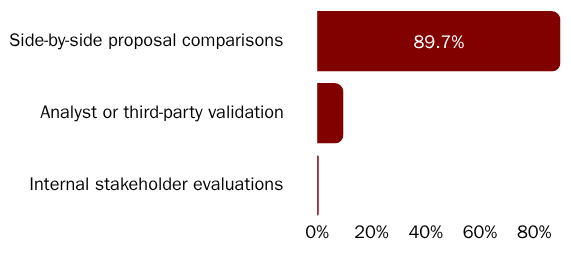
Analyst or third-party validation plays a much smaller role, with 10% relying on it. This tends to act as a supporting layer, helping confirm or challenge what is already visible in the proposals rather than shaping the decision from the outset.
Internal stakeholder evaluations are almost absent from the process, at just 1%. This suggests that decisions are not widely debated across teams but are handled more directly, with a clear focus on what is in front of them.
Sedulo Commentary: For Sedulo, this reinforces the importance of clearly showing how approach, methodology, and deliverables connect to the client’s specific decision needs. In a side-by-side comparison, the strongest providers stand out by making their strategic value easy to understand, not just by listing capabilities.
What Do Insights, Strategy, or Marketing Leaders Say Differentiates A High-Quality Provider From Others In Competitor Intelligence Research Services?
Consistent delivery and reliability are what differentiate competitor intelligence research services for 60% of insights, strategy, or marketing leaders.
A service is only as good as how well its insights stand the test of time:
Our audience identifies high-quality competitor intelligence research service providers primarily by their consistency and reliability. 29% of insights, strategy, or marketing leaders say this is absolutely essential, while 31% see it as a valuable differentiator, and less than 1% say it is not a major factor. This is where providers begin to separate. One strong piece of work is not enough if it cannot be repeated over time, especially when decisions depend on a steady flow of insight rather than a single snapshot.
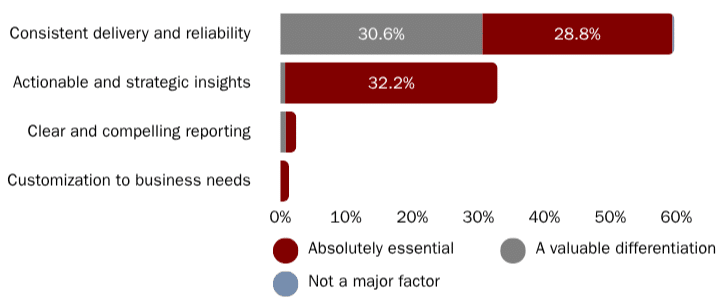
Actionable and strategic insights come next. 32% say this is absolutely essential, while less than 1% see it as a valuable differentiator. This puts it firmly in the category of a must-have. As Investopedia explains, competitive intelligence is used to uncover risks and opportunities before they become obvious. That kind of insight is expected as standard, not something that sets one provider apart.
Strong understanding of the market landscape plays a smaller role. 3% say it is absolutely essential, and less than 1% see it as a valuable differentiator, suggesting this is assumed rather than closely assessed.
Clear and compelling reports follow a similar pattern. 2% say they are absolutely essential, and less than 1% see them as a valuable differentiator. Presentation helps, but it does not carry the decision on its own.
Customization to business needs rounds out the list, with 1% calling it absolutely essential. This suggests leaders are not placing much weight on tailoring at this stage, focusing instead on whether the core output delivers.
Sedulo Commentary: Consistency and reliability are what allow competitor intelligence to become a trusted input into strategic decision-making. High-quality providers do more than deliver a strong report once; they create a dependable flow of insight that clients can use repeatedly as markets, competitors, and priorities evolve.
What Risks Or Concerns Do Insights, Strategy, or Marketing Leaders Consider Before Committing To Competitor Intelligence Research Services Providers?
55% of insights, strategy, or marketing leaders consider misalignment with business needs before committing to competitor intelligence research services providers.
The biggest danger is choosing something that isn’t actually fit for purpose:
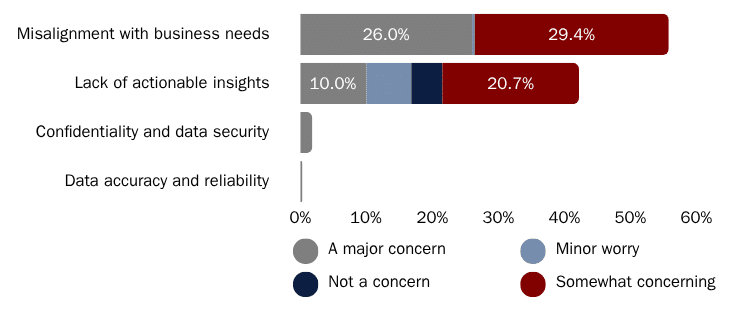
The way leaders in our audience assess risk before committing to a competitor intelligence research service provider centers on misalignment with business needs. 26% see this as a major concern, 29% as somewhat concerning, and less than 1% as a minor worry. This points to a clear concern about whether the work will actually meet the business’s operational requirements, rather than whether it looks good on paper.
Lack of actionable insights follows as the next area of concern. 10% see it as a major concern, 21% as somewhat concerning, 7% as a minor worry, and 5% say it is not a concern. This ties back to earlier findings, where actionable and strategic insights were treated as a baseline expectation. If the output cannot be used in practice, it quickly becomes a risk rather than a benefit.
Confidentiality and data security are much lower down the list, with 2% seeing them as a major concern. This tends to feature in more sensitive environments, where the risk of exposing competitive or internal information carries more weight. Data accuracy and reliability sit even lower, with less than 1% identifying them as a major concern. This suggests these areas are largely assumed to be in place, rather than actively questioned.
Sedulo Commentary: This shows that the greatest risk is not simply poor research, but intelligence that does not connect to the client’s actual business needs. Effective competitor intelligence should be built around the decisions a client is trying to make, so the output is relevant, actionable, and fit for purpose.
How Do Insights, Strategy, or Marketing Leaders Validate The Accuracy Of Insights Provided By Competitor Intelligence Research Services Providers?
59% of insights, strategy, or marketing leaders validate the accuracy of insights provided by competitor intelligence research services providers by cross-checking internal data.
The real test is what holds up in practice:
For our audience, validating the accuracy of competitor intelligence research starts with insights, strategy, and marketing leaders cross-checking results against their own data. 59% cross-check findings against internal data, using it as a reference point to see whether the external insight lines up with what they are already seeing. It is a way of grounding external input in something they trust.

Validation through real-world outcomes follows at 21%. Here, insights are tested in practice. If they hold up in decisions or results, they gain credibility. If not, they are quickly questioned.
Comparing with multiple external sources accounts for 14%. This is where the nature of external data comes into play. McKinsey points out that the external data landscape is fragmented and constantly expanding, with thousands of data products available. That makes it harder to judge the quality and the economic value of any single source, so cross-checking becomes part of the process.
Reviewing methodology and sources sits at 5%. This requires a more detailed look at how the data is gathered and interpreted, which can be time-consuming. It plays a role, but it is not the primary way accuracy is judged.
Sedulo Commentary: This reinforces that competitor intelligence must be grounded in evidence that can withstand scrutiny. The strongest insights are those that align with what clients are seeing internally while also adding external perspective that helps uncover risks, opportunities, and strategic implications.
How Do Insights, Strategy, or Marketing Leaders Measure The Effectiveness Of The Competitor Intelligence Research Services Providers They Work With?
91% of leaders measure the effectiveness of the competitor intelligence research services providers they work with by the quality and clarity of the insights delivered.
One factor dominates how the work is judged:
The effectiveness of providers is judged mainly on how clear and high-quality their insights are. 91% of insights, strategy, and marketing leaders use this as their primary measure, and for good reason. This is where everything hinges. When insight is clear, it moves quickly through the business. Teams pick it up, align around it, and act on it without friction. It shapes decisions, influences direction, and holds up when it is applied in real situations.
Clarity also determines how far the insight travels. Work that is easy to understand reaches beyond the immediate team and gets used more widely. It becomes part of how decisions are made, rather than something that sits with a small group.
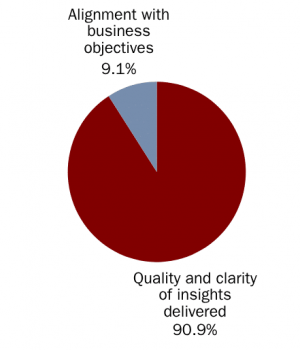
Alignment with business objectives plays a much smaller role, at 9%. It still matters, but it tends to be set early. Once the work is underway, the focus shifts to whether the insight itself carries through and proves useful when it is put into practice.
Sedulo Commentary: For Sedulo, this highlights that the value of competitor intelligence is ultimately judged by the clarity and usefulness of the insight delivered. When intelligence is easy to understand and apply, it is more likely to influence decisions across teams and create lasting strategic impact.
What Metrics Do Insights, Strategy, or Marketing Leaders Use To Judge The Effectiveness Of Competitor Intelligence Research Services Providers?
82% of insights, strategy, or marketing leaders use usefulness for strategic decision-making as an important metric for judging the effectiveness of a competitor intelligence research services provider.
Everyone is measuring the same metric; the difference is in degree:
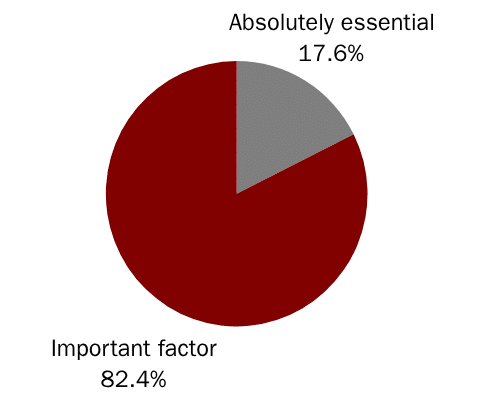
Insights, strategy, and marketing leaders assess the effectiveness of competitor intelligence research providers based on how useful their insights are for strategic decision-making. 18% of our audience say this is absolutely essential, while 82% describe it as an important factor. That level of alignment shows that insight is judged by what it does, not just what it says.
The fact that 82% stop at “important” is interesting, especially given that recent research on the role of competitive intelligence in strategic decision-making has highlighted a gap between insight and implementation. Competitive intelligence is widely recognized as a key input into strategic decisions, but its influence depends on whether it is carried through into action. Decisions are shaped by more than insight alone, including timing, internal priorities, and execution. This helps explain why usefulness is valued across the board, while still leaving room for other factors to influence the final outcome.
In practice, the focus shifts to whether insight can guide direction in a way that holds up when applied, rather than simply informing discussion.
Sedulo Commentary: Usefulness in strategic decision-making is the clearest measure of whether competitor intelligence is doing its job. Insight should not only inform discussion, it should help leaders make stronger choices, align stakeholders, and move from analysis to action.
How Do Insights, Strategy, or Marketing Leaders Prefer To Engage With Competitor Intelligence Research Services Providers Over Time?
100% of insights, strategy, or marketing leaders prefer to engage with competitor intelligence research services providers on a project basis.
For our audience, interactions with competitor intelligence research providers are driven entirely by specific project needs. 100% of insights, strategy, and marketing leaders use this model, which makes it less of a preference and more of a fixed way of working. Each engagement is tied to a specific question, decision, or pressure point, so it makes sense to keep the work contained and clearly defined.
This approach gives leaders control. They can see what they are getting, judge how well it performs, and decide what to do next without being locked into something ongoing. It also keeps the focus on the output itself. If the work delivers, it opens the door to the next project. If it doesn’t, it ends there.
That also explains why no broader engagement model appears alongside it. Each piece of work is tied to a defined business question, which keeps the brief focused, the outcome visible, and the value easier to judge before anything continues.
Sedulo Commentary: For Sedulo, project-based engagement reflects the need for competitor intelligence to be focused, timely, and tied to a specific business decision. Each engagement should create clear value on its own while building the foundation for a trusted, ongoing strategic partnership.
Which City Are The Insights, Strategy, or Marketing Leaders in Our Audience Located In?
85% of insights, strategy, or marketing leaders in our audience are located in Chicago.
Our audience is anchored in a handful of regional business epicenters:
85% of insights, strategy, or marketing leaders are located in Chicago. Chicago has long been a hub for large, established businesses across sectors like manufacturing, finance, and logistics. That mix creates a strong demand for competitor intelligence, especially where decisions need to balance scale, cost, and market position.
New York accounts for 9%. With its mix of finance, media, and global brands, competition is constant and highly visible. Leaders here tend to operate in crowded markets, where keeping a close eye on competitors is part of everyday decision-making.

San Francisco comes in at 3%. The focus here leans more toward technology and innovation, where markets shift quickly, and new entrants appear all the time. That makes competitor intelligence more about staying ahead of change than tracking established players.
Houston also represents 3%. Its growth as a technology and business hub, alongside its roots in energy and infrastructure, brings a different set of competitive pressures, with demand for insight tied to industries that are evolving at a rapid pace.
Sedulo Commentary: For Sedulo, the concentration of leaders in major business hubs reinforces the importance of competitor intelligence in complex, high-pressure markets. Organizations operating in these environments need clear insight into market dynamics, competitor moves, and customer priorities to make confident strategic decisions.
Turning Insights into Action
Overall, these opinions reveal a clear theme of how competitor intelligence research services are viewed. It all comes back to how well insight helps people decide what to do next and how quickly it can be put into action.
The providers that stand out are those that deliver work that teams can pick up quickly, use across the business, and build on over time. When this happens, competitor intelligence becomes part of the day-to-day process that shapes decisions, helping businesses set direction and respond to change.
About The Data
Sourced using Artios from an independent sample of 45,414 opinions of insights, strategy, or marketing leaders in the USA across X, Quora, Reddit, Bluesky, TikTok, and Threads. Responses are collected within a 95% confidence interval and 5% margin of error. Results are derived from what people describe online, from opinions expressed online, not actual questions answered by people in the sample.