

Modern B2B markets are crowded, highly competitive, and constantly shifting. Buyers expect pricing clarity, a responsive sales team, and an experience that feels tailored to their needs. Which means organizations are facing pressure to justify price, improve sales journeys, and make confident value propositions with a complex go-to-market strategy.
Despite these growing demands, many companies still operate with only a partial view of how competitors behave during the sales cycle. They might rely on win-loss interviews, secondhand anecdotes, or information gathered through public review websites. These inputs are valuable, but they rarely reveal the full reality of a competitor’s sales process.
B2B mystery shopping fills this gap.
Mystery shopping captures the real-world experience of buyers by documenting actual interactions with competitors and internal teams. It provides leadership with real evidence and data, which allows them to make better, faster, and more confident commercial decisions.
Sedulo Group has executed hundreds of mystery shopping programs across technology, manufacturing, consumer goods, and professional services. The following guide explains what B2B mystery shopping is, why it has become so important, how it changes by industry, and how organizations can use the resulting insights to improve competitive performance.
What Is B2B Mystery Shopping?
B2B mystery shopping is a research method where trained analysts work with legitimate prospective buyers to evaluate how a company sells, prices, positions, and supports their products or services.
As we continue with this guide, here are some key definitions:
Mystery Shopping (B2B): A structured process in which prospective buyers engage competitors to document the full sales experience. To be legally sound and ethical, you cannot impersonate, lie, or fake any of this interaction. Your “buying partner” must be a legitimate company who could actually use the services or products you are shopping. Sedulo specializes in this type of mystery shopping and we can help guide you to ensure you are conducting the effort in a legal and ethical way.
B2B mystery shopping provides a structured, objective evaluation of how buyers experience a sales cycle. Unlike traditional market research, mystery shopping collects real interactions, including outbound emails, discovery calls, pricing conversations, demos, proposals, follow-ups, and negotiation moments. A strong mystery shopping program rests on three foundational components:
1) Know Your Buyer / ICP: To ensure you are getting a “good” representation, you must know what kind of buyer should go through the mystery shop. Are you trying to sell to medium-sized businesses? Are you selling only to Technology companies with more than 10k employees? The more focused your ICP the better, but it can also mean the mystery shop is more expensive. There are only so many potential mystery shop partners that fit a highly targeted ICP. Working with a firm like Sedulo can help open up your options, but we even struggle to find some ICPs.
2) Know Your Competitors: Who do you want to “shop”? Knowing which competitors are your biggest current and future threats can be a key way to prioritize shopping some competitors but not all. The more competitors = the more expensive.
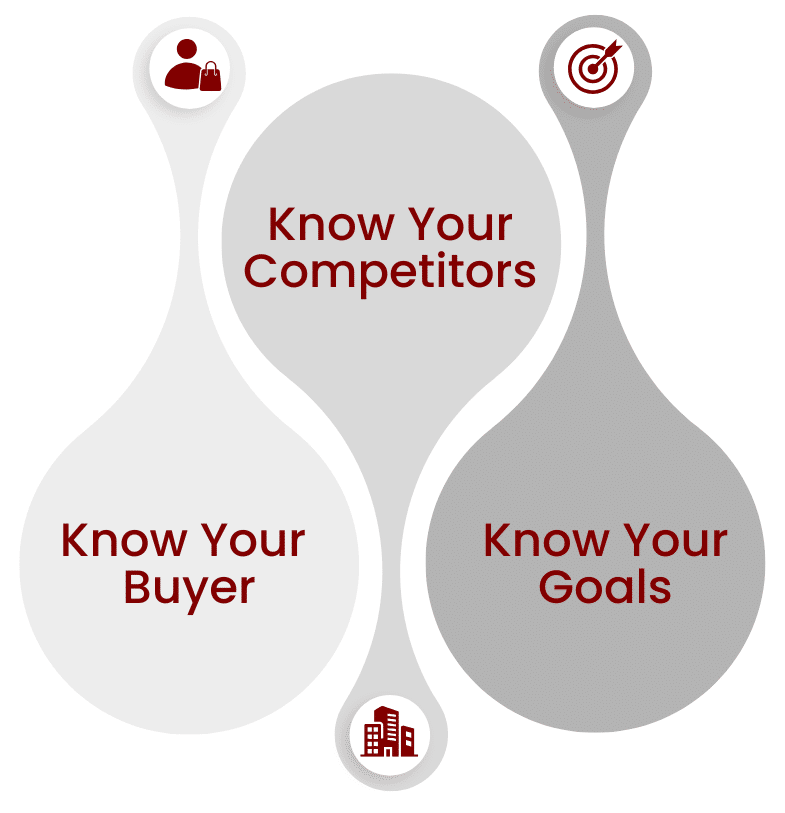
3) Know Your Goals: Organizations typically use mystery shopping to benchmark a competitor’s sales approach, pricing, messaging strategies, and overall buyer journey. Mystery shopping addresses blind spots, such as unclear competitive pricing, inconsistent sales execution, or gaps between marketing promises and real buyer experiences.
In summary, to ensure strong results, organizations should have:
- A clear understanding of which competitors or internal teams should be evaluated
- Alignment across sales, marketing, and strategy leadership
- Realistic buyer personas
- Agreement on the decisions the findings will support
- A willingness to commit to a full, end-to-end buyer journey
A strong mystery shopping program produces insights that support real decisions. High-quality programs use real buyers, trained analysts, consistent execution, detailed documentation, and objective analysis. The end result is a set of findings that help leaders adjust pricing, sharpen messaging, and optimize sales performance.
A strong mystery shopping program produces insights that support real decisions. High-quality programs use real buyers, trained analysts, consistent execution, detailed documentation, and objective analysis. The end result is a set of findings that help leaders adjust pricing, sharpen messaging, and optimize sales performance.
How Sedulo Group Executes Mystery Shopping Programs
A successful mystery shopping program follows a defined sequence designed to maximize realism, accuracy, and strategic value.
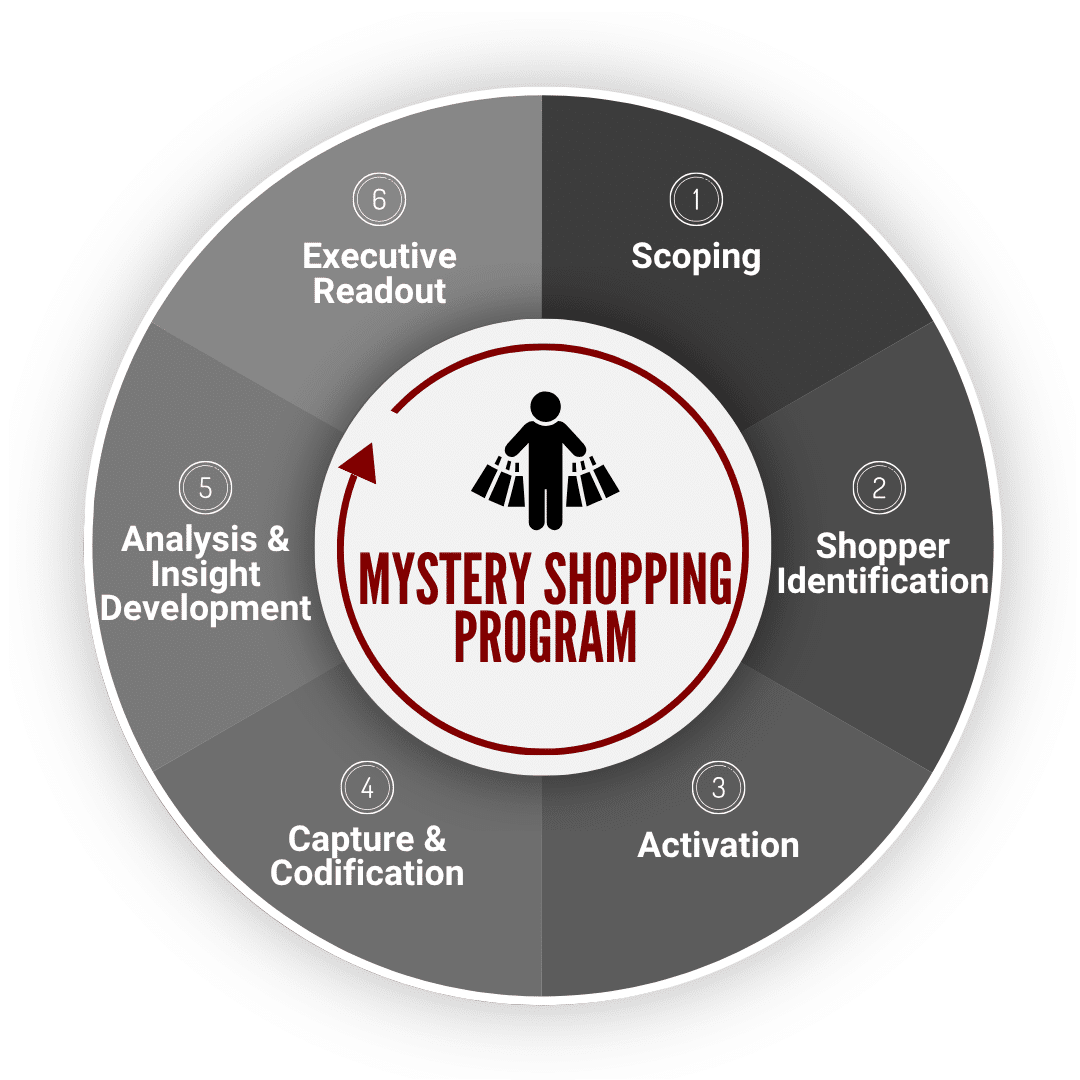
1. Scoping
Sedulo begins by working with client stakeholders to understand the business questions they need answered. This includes defining competitors, ideal buyer personas, and the depth of analysis required. Clear scoping ensures data will be directly applicable to upcoming strategic decisions.
2. Shopper Identification
We go and find a partner company who is a legitimate buyer of the services and fits your ICP. These criteria includes industry, company size, geography, and use case. A real partner protects the integrity of the interactions and promotes natural engagement from competitor sales representatives.
3. Activation
Our partner company reaches out to target competitors in a natural sales channel. Typical touchpoints include website contact forms, inbound calls, SDR outreach responses, partner channels, or direct emails. Once contact is established, the shopper continues through the natural progression of the sales cycle.
4. Capture and Codification
Every interaction is recorded and categorized. This includes discovery questions, demo flow, competitive positioning statements, pricing structures, follow-up speed, and negotiation strategies. The Sedulo team organizes this data and creates clear apples-to-apples comparisons across vendors.
5. Analysis and Insight Development
Sedulo synthesizes findings into themes and patterns. The focus is on identifying what differentiates each competitor, how they attempt to influence buyer perceptions, and where buyer experience breaks down.
6. Executive Readout
Clients receive a structured report and leadership-ready presentation. This includes comparative scorecards, business implications, and recommended actions tied directly to product, pricing, sales enablement, and go-to-market strategy.
Common Outcomes of Mystery Shopping
Organizations often gain:
- Detailed competitor pricing and discounting practices
- Clarity on the strengths and weaknesses of competitor demos
- Insight into messaging and value propositions used in the field
- Evidence of negotiation strategies
- Identification of friction points within both competitor and internal sales processes
- Recommendations that can be applied immediately
Key Stakeholders Who Benefit
- Sales leadership
- Strategy and competitive intelligence teams
- Product marketing
- Product management
- Customer experience leaders
- Executive leadership
Why Proper Execution Matters
Mystery shopping must be conducted with real-world buyers and focused precision. Poorly designed programs risk inaccurate data, vague conclusions, and misleading internal decisions. A strong partner ensures realistic interactions, thorough documentation, and careful analysis that can withstand scrutiny from executives.
Why B2B Mystery Shopping Matters Today
B2B mystery shopping matters because it provides objective, real-world insights into competitor pricing, sales performance, buyer experience, and commercial strategy.
The pressure on sales and marketing teams continues to increase. Buyers expect faster responses, clearer pricing, and more consultative conversations. Competitors refine their strategies continually. Internal teams need real data to stay ahead.
Mystery shopping has grown more important for several reasons:
- Competitive pressure has intensified
- Budgets remain constrained
- Buyers expect transparency and speed
- Sales cycles involve more stakeholders and more expectations
- Companies need evidence-based intelligence, not assumptions
Organizations often face questions such as:
- How are competitors framing their value in live sales situations
- What pricing or discounting patterns exist in the market
- Where does our own buyer experience break down
- How quickly do competitors respond to inbound leads
- What objections are they emphasizing
- How do sales materials compare across the industry
Mystery shopping provides clear answers. Organizations use insights from mystery shopping to:
- Improve win rates
- Strengthen competitive positioning
- Enhance sales training
- Refine demo scripts
- Adjust pricing and packaging
- Identify product priorities
- Improve the consistency of follow up and communication
Companies apply findings to:
- Pricing strategy
- Sales enablement
- GTM and messaging
- Product development
- Renewal and retention strategy
- Sales hiring and performance management
How B2B Mystery Shopping Applies Across Industries
Every industry has unique commercial challenges, sales cycles, and expectations from buyers. Sedulo adapts each program to reflect these dynamics.
Technology
Technology companies often operate in fast-moving markets with high feature parity. Sales cycles involve demos, technical reviews, and multiple stakeholders. Mystery shopping helps identify:
- How competitors position their differentiators
- How pricing structures vary across segments
- The depth and quality of competitor demos
- How competitors handle security or integration questions
Programs can take longer than expected but they often reveal patterns in discounting, competitive messaging, and total cost of ownership narratives.
Consumer Goods
Sales often involve distributors, wholesalers, or retail buyers. The buyer experience depends on both the vendor and the channel partner. Mystery shopping reveals:
- Strength of category expertise
- Differences in replenishment timelines
- Promotional strategies
- Service-level expectations from buyer teams
These efforts can be straight-forward but require a high number of “shops” to feel legitimate (one “flooring” quote isn’t comparable to another, so you have to get hundreds). Insights often influence channel strategy, packaging of promotions, and demand planning.
Manufacturing
Manufacturing sales cycles involve detailed specifications and long-term service considerations. Mystery shopping helps uncover:
- The speed and quality of initial response
- The level of technical guidance provided
- Clarity of pricing and quoting processes
- Service commitments and warranty structures
Depending on the equipment, manufacturing can have either an extremely easy shop or extremely complex. Knowing your own sales cycle will help ensure your expectations are clear on the front-end of the effort. These insights guide improvements in quoting accuracy, field team readiness, and long-term support models.
Professional Services
Professional services rely heavily on credibility and expertise. Mystery shopping often highlights:
- Discovery quality
- Clarity of proposals
- Seniority of team members involved in the sales cycle
- How firms articulate methodology or project approach
Depending on how customizable the professional services are will determine whether a mystery shop makes sense at all. Some services are transactional and easy to document and quote. Other services are much more unique and ad hoc, which means the sales cycle will be unique each and every time. These types of custom quotes are not a great fit for mystery shopping. However, if you are investigating the transactional services, you can typically use the findings to improve proposal processes, pitch structures, and the allocation of senior talent.
Key Takeaways and Next Steps
Core Insights
- B2B mystery shopping provides clarity on how competitors behave in real sales cycles.
- The insights help align decisions across sales, marketing, product, and strategy.
- A high-quality & legal program requires realistic buyers, experienced analysts, and structured evaluation.
- The output directly supports better pricing, messaging, and sales performance.
- Mystery shopping works best when paired with broader competitive intelligence programs.
If your organization faces uncertainty around competitor pricing, messaging, or sales performance, or if you are preparing for a new product launch or go-to-market initiative, a mystery shopping program may provide immediate value. Sedulo Group can help assess whether a focused or comprehensive program is best suited to your needs.
Common Questions About B2B Mystery Shopping
Mystery shopping programs usually take 4 to 12 weeks, reveal competitor pricing and sales tactics, and provide actionable insights for sales and marketing strategy.
Frequently Asked Questions
How likely is it that competitors detect the mystery shopper?
With a realistic buyer and trained analysts, detection is extremely unlikely.
Can mystery shopping uncover competitor pricing?
Competitors frequently share pricing ranges and discount structures during live sales discussions. Analysts capture all information provided.
How long does a typical program take?
It depends, but most projects require four to twelve weeks, depending on the complexity of interactions.
What mistakes should organizations avoid?
Common pitfalls include vague objectives, unrealistic buyer stories, and insufficient sample sizes.
How does mystery shopping compare to other research methods?
It complements methods like win-loss interviews and secondary research by revealing how competitors behave in real time.
What metrics are typically evaluated?
Response times, discovery quality, demo structure, pricing clarity, communication style, and follow up cadence.
Can small teams participate?
Yes. Many organizations start with a narrow program focusing on a limited number of competitors.
Conclusion
B2B mystery shopping is one of the most powerful tools available for understanding the true competitive landscape. It replaces guesswork with firsthand evidence, enabling leaders to make strategic decisions with greater confidence.
Sedulo Group brings a structured, discreet, and analytical approach to mystery shopping. By documenting real interactions and translating them into clear strategic insights, Sedulo helps organizations sharpen their competitive edge, improve sales performance, and make well-informed commercial decisions.
If your organization is looking to improve competitive visibility or strengthen its go-to-market