

Firms in professional and financial services (PFS) operate in extreme market volatility, facing constant pressure from regulations, technology, and competition. Leaders can’t afford to risk budget or efforts on anything but the most effective growth initiatives.
To ensure leaders can do just that, the Threat and Opportunity Prioritization matrix was created.
What Is the Threat and Opportunity Prioritization Matrix?
The matrix is a decision tool that ranks external signals by three factors: impact, probability, and confidence. It shows leaders which issues demand immediate action, which need testing, and which can be monitored. The goal is to direct resources toward developments that will shape revenue, risk, and market share.
- Impact considers how significant an event could be for the business, from altering revenue streams to reshaping client relationships.
- Probability captures how likely it is that the event will actually occur or gain traction in the market.
- Confidence reflects the degree of certainty in that judgment, based on the quality and reliability of the information available.
When signals are assessed through this lens and plotted on the matrix, leaders gain a clear picture of priorities.
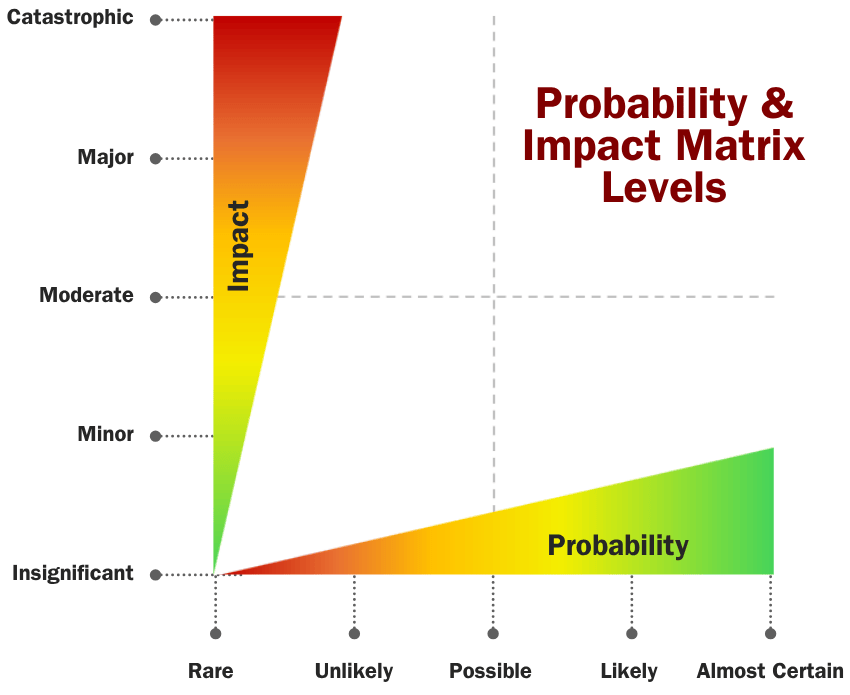
For a deeper look read Threat Matrix 101: How the Probability and Impact Matrix Improves Strategic Decision-Making.
What You Need to Know Before Using the Matrix
Before a team can apply the Threat and Opportunity Prioritization Matrix, a few foundations need to be in place:
The team must agree on definitions. Impact, probability, and confidence should mean the same thing to everyone involved.
- For example, what qualifies as “high impact” in one business unit should not be considered “moderate” in another.
- Establishing clear scoring criteria ensures consistency when signals are evaluated.
Teams need a reliable flow of external insights.
- This typically includes competitor monitoring, regulatory tracking, client feedback, industry research, and technology scanning.
- Some of this knowledge can come from existing functions, such as compliance, sales, or marketing. In other cases, it may require structured research or external partners who specialize in competitive and market intelligence.
Signals should be collected and scored before the matrix session begins.
- The team should come in with a baseline view of key developments already mapped against the three dimensions.
- The role of the matrix is then to prioritize, debate, and validate those inputs, not to generate them from scratch.
Cross-functional leadership should be involved in the process.
- The matrix works best when strategy, risk, compliance, and product teams all participate and share ownership of the outcomes.
- This cross-functional perspective prevents bias and ensures that decisions are based on a broad view of the business environment.
Why It Matters for Professional and Financial Services
Professional and financial services face daily shocks from regulation, technology, and client demands. These forces can erase margin and market share if leaders react too slowly.
The decisions firms make are shaped daily by shifting regulations, evolving client expectations, technological disruption, and competitive moves that can change market dynamics quickly and significantly. In this environment, the difference between acting early and acting late often determines whether a firm is seen as a market leader or left catching up.
The matrix addresses several sector-specific challenges:
- Regulatory change: Rules shift fast and vary across regions. Firms must judge which changes will disrupt operations and client trust.
- Client expectations and trust: In both banking and professional services, clients expect transparency, innovation, and responsiveness. A shift in sentiment can move quickly from emerging trend to mainstream expectation.
- Technological disruption: Fintech challengers, AI-driven audit tools, and blockchain-based platforms are reshaping service delivery models. Established firms face the dual challenge of monitoring these innovations and determining which ones will genuinely impact their business model.
- Resource allocation under uncertainty: Professional and financial services firms operate under tight cost scrutiny. Every dollar must go to priorities that matter most.
- Global exposure: Many firms serve cross-border clients. A regulatory change in one region, a competitor launch in another, or a geopolitical event abroad can ripple into global operations. Without a framework, it is easy for these external forces to overwhelm internal planning.
Firms that overreact to headlines risk burning resources, such as the huge post-COVID push for NFTs and the metaverse. Firms that wait too long to move risk losing market share, such as the laggards facing market losses due to a slow uptake of AI.
The Threat and Opportunity Prioritization Matrix ensures external volatility is translated into structured, evidence-based decisions.
How to Apply the Matrix
To see how the Threat and Opportunity Prioritization Matrix comes to life, it helps to walk through a structured scenario. Imagine a mid-sized financial services firm that wants to get ahead of regulatory and competitive shifts.
The process would typically follow these steps:

1) Collect signals
The firm starts by gathering inputs from multiple sources. Compliance teams track regulatory consultations and policy papers. Strategy analysts monitor competitor product launches and investor reports. Marketing and sales contribute client feedback from recent pitches and RFPs. Together, these streams form the raw material for analysis.
Common mistake to avoid: treating all signals as equal. Monitoring must be selective, with weighting applied to separate minor chatter from material developments. Otherwise, leadership risks chasing noise while missing the issues that truly matter.
2) Score against key dimensions
Once collected, the signals are scored across impact, probability, and confidence. For example, a proposed regulation requiring stricter ESG disclosures might be considered high impact, moderate probability, and low confidence if the language is still under debate. Scoring is ideally done collaboratively, with risk, product, and compliance teams agreeing on definitions and criteria before scoring begins.
Common mistake to avoid: confusing probability with confidence. Just because something feels likely does not mean the data is reliable. The scoring process should explicitly distinguish between the two so decisions are anchored in evidence, not gut instinct.
3) Map and analyze
The scored items are plotted on the matrix. This visual step helps the leadership team see patterns and clusters: which issues are urgent, which require further research, and which can be monitored over time. At this stage, teams may also identify gaps, areas where confidence is low and more research is needed.
4) Create action plans
For the most critical threats or opportunities, the firm develops clear next steps. A high-impact competitor move might trigger an accelerated product development initiative. A low-confidence regulatory rumor may lead to commissioning outside research or joining an industry working group to increase certainty. Each action item is tied to an owner, timeline, and follow-up cadence.
5) Review and refresh
The matrix is not a one-time exercise. To stay relevant, the firm establishes a quarterly review where new signals are added, old items are updated, and priorities are revalidated. This ensures the matrix evolves with the market and remains a living tool for decision making.
Common mistake to avoid: treating the matrix as a stand-alone tool. Its greatest value comes when it is embedded in a broader insights rhythm that includes trend analysis, competitive monitoring, and executive workshops. When it exists in isolation, it risks becoming a static diagram rather than a dynamic decision-making aid.
Key Takeaways and Next Steps
The Threat and Opportunity Prioritization Matrix helps leaders cut through noise and focus on what truly matters. Three actions stand out:
1) Embed it in strategy cycles: Use the matrix in quarterly or annual planning to frame discussions around external threats and opportunities.
2) Pair it with trend analysis: Monitor competitor actions, customer sentiment, and regulatory changes to ensure the matrix is always informed by current signals.
3) Commit to action, not just monitoring: The value lies in moving items across quadrants, from low confidence to high, from watch list to initiative.
Professional and financial services thrive on foresight and disciplined execution. With the right tools, uncertainty becomes manageable, and change becomes an advantage.
At Sedulo, we help clients interpret external signals, prioritize what matters, and act with confidence. The Threat and Opportunity Prioritization Matrix is one way to ensure that insight leads not just to knowledge, but to impact.