
Budget season often feels like a tug-of-war between departments, instincts, and last year’s numbers. But what if you could replace guesswork with evidence? Benchmarking transforms budgeting from internal politics into strategic alignment. As you plan for 2026 and begin to launch your new initiatives, here’s how to integrate benchmarking into your budgeting process for clarity, confidence, and credibility.
Why Benchmarking Belongs in Budgeting
Strategic planning and budgeting are often dominated by legacy baselines and internal negotiations. Too often, the loudest voice wins. Benchmarking introduces external context, data, and discipline. It reframes budgets as strategic calibrations. Instead of asking “what can we cut?” benchmarking helps leaders ask “what should we prioritize?”
Three Ways to Make It Work
1) Choose Comparable Peers
Avoid generic industry averages, benchmarks only work if peers are truly relevant. Sedulo helps clients build three specific sets through a market scan project:
Competitive Peers: Companies selling the same services to the same buyers as you do with the same go-to-market motion and long-term goals as you have.
Competitors: Companies selling similar services to the same buyers but with a different GTM motion or strategic objectives.
Peers: Companies selling different services to the same buyers.
This structure ensures your benchmarks reflect the right context—not generic industry averages.

2) Normalize Relentlessly
Raw numbers don’t tell the full story. Translate them into ratios (e.g., per employee, per customer, per dollar of revenue, etc.) and adjust for geography and company maturity. Only then can you draw valid comparisons between yourself and the benchmark.
3) Connect Spend to Outcomes
Never stop at “peers spend more.” Tie allocation shifts to measurable results, such as:
“If we move from bottom quartile to median in customer support spend, we expect to reduce churn by X% and increase renewal rates by Y%, based on peer outcomes.” This logic and “X leads to Y” outcomes will build internal credibility and sets the stage for post-investment OKR and KPI measurement.
Practical Steps for Your Next Planning Cycle
- Add a peer range column to budget templates.
- Include quartile charts in board presentations.
- Flag major deviations with notes on your strategic intent.
Benchmarking won’t deliver a “perfect” budget, but it will deliver a smarter one. Done well, it shifts the conversation from instinct to evidence. It creates alignment, credibility, and confidence in how resources are allocated.
If you want help starting or optimizing your benchmarking efforts,
➡ Reach out to Sedulo and we’ll show you how to benchmark with clarity, precision, and confidence.
Want to Learn More?
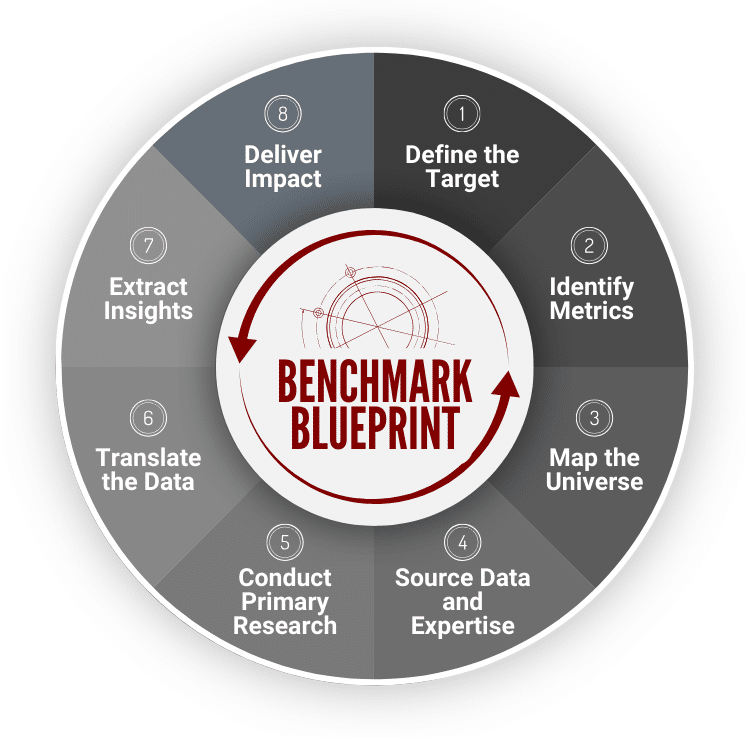
Benchmarking doesn’t have to be overwhelming. Sedulo’s Benchmark Blueprint breaks down a simple, repeatable process to benchmark anything, from pricing to performance, so you can generate insights that actually move strategy forward.
Read ‘How to Benchmark Anything’ and download your free Strategic Worksheet for Business Benchmarks